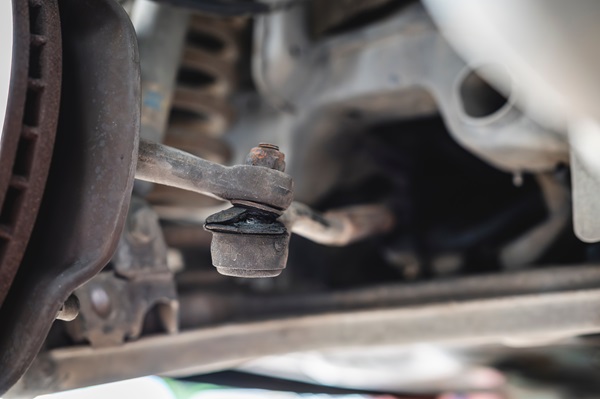
The sway bar is easy to overlook because you rarely notice it when everything is working. Then you notice a light knock over broken pavement, or the car feels less settled in a turn, and a technician mentions sway bar links or bushings.
The bar helps control body roll by connecting suspension movement from one side of the vehicle to the other. The steel bar itself is only part of the system. Its links, bushings, and mounting points can all affect how it works.
The Sway Bar Helps Control Body Roll
When a vehicle turns, the body tends to lean toward the outside of the corner. A sway bar, also called an anti-roll bar, resists some of that difference in suspension movement between the two sides. The amount of resistance depends on the bar and the suspension design.
It works alongside the springs and shocks or struts. It isn't the main part holding the vehicle's weight up, and it doesn't replace the dampers that control repeated movement after a bump. Understanding those separate jobs helps explain why a sway bar repair may reduce a particular noise without changing every part of the ride.
Sway Bar Links Transfer Movement To The Bar
Links connect the sway bar to the suspension. Many use small joints or bushings that allow the connection to move while transmitting force. Once a joint develops play, it can knock as the wheels move over uneven pavement, especially when one wheel hits a bump before the other.
The sound may be a quick rattle rather than a heavy bang. It can happen on a rough parking lot while the car still feels comfortable on a smooth road. A link may look fine at a glance but still be loose when checked in the direction it loads during driving.
Sway Bar Bushings Support The Bar At Its Mounts
Bushings hold the bar at its mounting points while allowing the required movement. As they wear or deteriorate, the bar can move more than intended. That can create a clunk, creak, or squeak, depending on the design and the condition of the rubber and mounting surfaces.
The inspection checks fit, movement, and mounting security. Some bushing designs have specific lubrication instructions, while others should not receive a generic lubricant. Applying a product because a bushing squeaks can mask the symptom briefly without correcting wear, and the wrong product can be unsuitable for the material.
A Loose Sway Bar Connection Can Change Cornering Feel
If a connection breaks or becomes very loose, the bar may not resist body roll as intended. The car can feel less settled during turns or lane changes. How much the driver notices depends on the suspension and which connection has failed.
Tires, springs, dampers, and other suspension parts can also change that feeling. Greater lean does not identify the sway bar by itself. Do not make abrupt steering maneuvers to test it. A new feeling of instability deserves inspection under controlled conditions, not a harder corner to see whether the problem becomes obvious.
A Sway Bar Noise Can Resemble Other Suspension Wear
Strut mounts, control arm bushings, ball joints, and brake hardware can produce noises that seem to come from the same corner of the vehicle. Small road edges may expose the looseness even when a large, smooth speed hump produces little sound.
We inspect nearby components and compare the complaint with what we find in person. Loaded and unloaded checks may be needed because parts can behave differently when the wheels are hanging. The goal is to find the loose connection, not replace a sway bar link simply because it is a common source of knocking.
Sway Bar Repairs Should Preserve The Intended Handling
Replacement links and bushings should suit the vehicle and bar design. Mounting hardware, tightening instructions, and any specified suspension position are part of installing them correctly. A worn mounting point also needs attention if it prevents the replacement part from being held properly.
A stiffer performance bar is a separate modification, not an automatic part of ordinary repair. It can change the vehicle's balance through turns. An alignment isn't required after every sway bar link job, although related work or existing tire wear may make it worth checking wheel angles.
Sway Bar Inspection Starts With The Way The Noise Happens
Tell us whether the knock appears over bumps under one wheel, when entering a driveway at an angle, or during turns. Mention whether it comes from the front or rear and whether it changes with braking. Those details help reproduce the sound on the type of road that brings it out.
Don't judge the repair's urgency only by how loud the noise is. Some link noises start as an annoyance, while other nearby loose parts can more seriously affect wheel control. Severe clunking, pulling, or new instability is a reason to stop driving normally and schedule an inspection.
Get Sway Bar And Suspension Service In Bexley, OH, With Bexley Automotive
If your car knocks over uneven roads or feels less settled in turns, Bexley Automotive in Bexley, OH, can inspect the sway bar links, bushings, and nearby suspension parts to find the source.
Contact us to schedule a sway bar and suspension inspection.