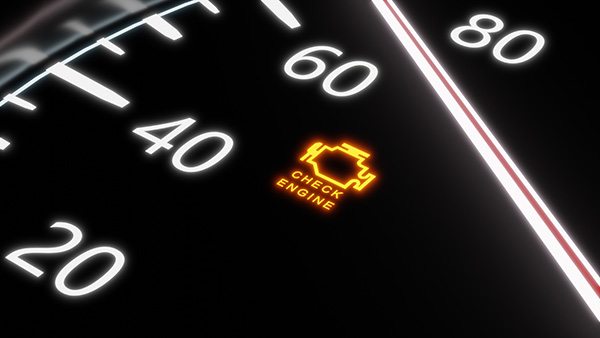
A check engine light can pop on when the car still starts, idles, and drives as if nothing changed. That’s what makes it so annoying. You’re left wondering if it’s a real problem, a sensor being picky, or something you can ignore until next month. The truth is, the light is often reacting to something small, but small does not always stay small.
The key is figuring out what kind of warning you’re dealing with.
Why The Light Can Come On With No Symptoms
The computer is watching dozens of inputs all the time, and many of those systems can drift out of range before you feel anything. Some faults affect emissions more than drivability, so the car can feel fine while the system is still not happy. A loose gas cap is the classic example, but there are plenty of others that are less obvious.
A second reason is timing. A fault can happen during one drive cycle, store a code, then not repeat immediately. The light stays on to tell you something happened, even if the car is behaving during the next trip.
Common Triggers That Still Drive Fine
Some of the most frequent causes are related to airflow, fuel trim, and evaporative emissions. A small vacuum leak can be mild enough that you do not feel a rough idle, but the computer sees the correction it has to make. A mass airflow sensor that is slightly dirty can do the same thing, especially when the weather changes.
EVAP leaks are another big category. These are often caused by a cap that is not sealing, a cracked hose, or a purge valve issue, and the car can drive perfectly. We see this a lot after fill-ups, where the timing of the warning makes it feel like a coincidence.
How Driving Conditions Influence Codes
Short trips and long idle time can change what the engine computer sees. If the vehicle rarely gets fully warm, moisture and fuel vapors can hang around longer than they should, and that can nudge certain systems into setting a code. Stop and go traffic also means more heat cycling and more frequent small corrections.
This is where regular maintenance helps, because small issues like aging spark plugs, a tired battery, or a dirty air filter can push borderline readings over the line. The car might still feel okay, but the computer is tracking the trend. A warning light is often the first hint that the trend is no longer minor.
What Happens If You Ignore It Too Long
Sometimes nothing dramatic happens for a while, and that is what makes people delay it. The risk is that you lose the early window where the fix is simple. A small leak can become a larger leak, and a small misfire can become a catalyst-damaging misfire if it worsens.
There’s also the issue of stacking problems. If the light is already on, you might miss the moment when a new code shows up. Then you’re sorting through multiple faults at once, which is rarely the cheapest way to handle it.
Quick Checks Before You Schedule Service
You can gather helpful information without taking anything apart. Start by checking whether the light is steady or flashing. A flashing light usually means you should reduce driving and have it checked quickly.
Here are a few safe checks that can help narrow it down:
- Make sure the gas cap is tight and the seal looks intact
- Note when the light came on, especially after fueling or a long drive
- Pay attention to any new smell, like fuel vapor near the car after parking
- Listen for a rough idle that comes and goes
- Look for obvious loose hoses or disconnected clips you can see from above
If the light turns off after a few days, that does not always mean the issue is gone. The code may still be stored, which can be useful for figuring out what happened. An inspection can pull that stored info and keep you from starting over if it returns.
How We Pinpoint The Real Cause
The first step is reading the code, but the code is usually a starting point, not a final answer. Then we look at data that shows what the engine was doing when the fault set, such as temperatures, fuel trim behavior, and operating conditions. That helps separate a one-time glitch from a repeating issue.
From there, we confirm the most likely causes with targeted testing, not by swapping parts. That might mean checking for EVAP leaks, verifying sensor readings, or confirming ignition performance under load. When the cause is verified, the fix tends to be more direct, and the light is less likely to come back next week.
Get Check Engine Light Service In Bexley, OH, With Bexley Automotive
If your light is on but the car feels fine, Bexley Automotive in Bexley, OH, can track down what triggered it and help you decide what needs attention now versus what can be planned.
Set up a visit and get a clear answer you can trust.